Malawi University of Business and Applied Sciences (Mubas) energy specialist Suzgo Kaunda has said the country’s main vulnerability is not fuel storage capacity, but its ability to finance the commodity’s imports.
The Mubas senior lecturer in energy and climate said this in an interview on Friday in the context of a report by International Monetary Fund (IMF) economists Jean-Marc Natal and Azim Sadikov who said that Malawi and other import-dependent fuel markets are facing renewed price and supply risk due to depletion of buffers that absorbed price shocks.
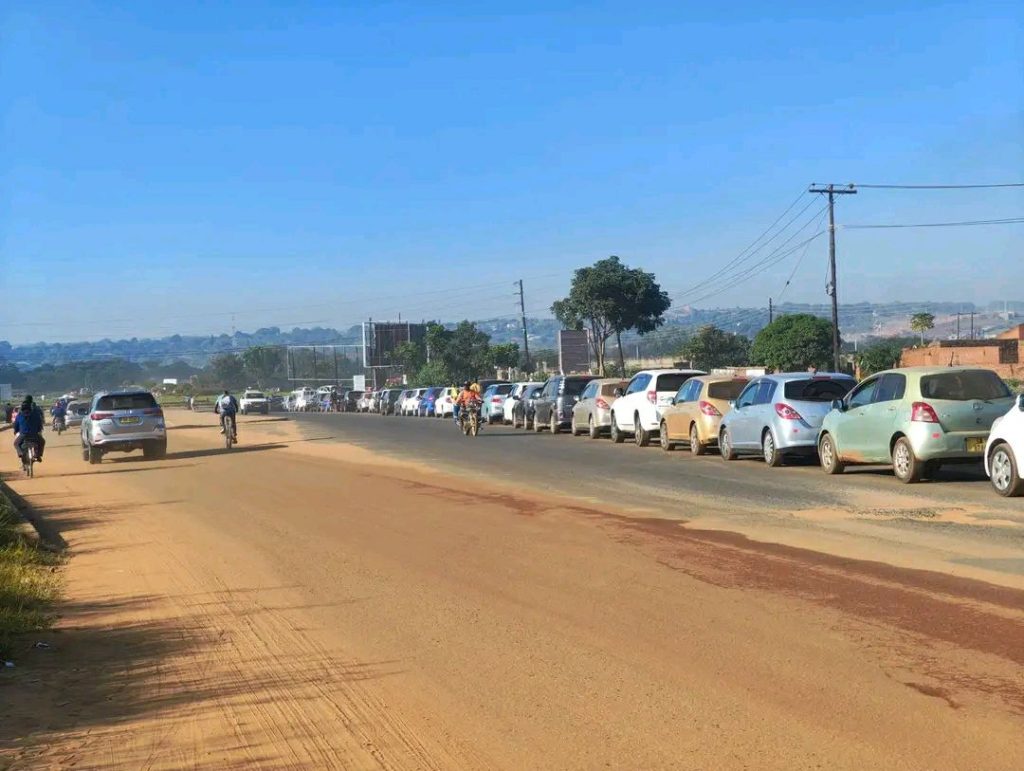
Said Kaunda: “We have enough storage to keep the fuel that can sustain us through the crisis. But the problem is the foreign exchange.
“Do we have the foreign exchange to import fuel that can sustain us for a month? I think the answer would be in the negative.”
The two IMF economists said that despite the Middle East conflict effectively closing the Strait of Hormuz and disrupting about 20 million barrels of crude oil and refined products per day, representing a fifth of global consumption, crude prices settled around $90 (about K157 000) to $100 (about K175 000) per barrel after an initial spike.
In their July analysis titled ‘The oil market absorbed the war shock, but buffers are running low’, the economists attribute the resilience to three factors: falling demand, particularly in Asia, an increase in production outside the Gulf and extensive withdrawals from global oil inventories.
The Reserve Bank of Malawi Monthly Economic Review for July puts the country’s foreign exchange reserves at $629.8 million (about K1.1 trillion), equivalent to about 2.5 months of import cover, a marginal improvement from $571.6 million (about K1 trillion), or 2.3 months of import cover.
However, the position remains below the 3.9 months of import cover benchmark recommended for credit-constrained economies such as Malawi to ensure continued importation of essential imports such as fuel, fertiliser and medical drugs.
That leaves Malawi particularly exposed if elevated international fuel prices increase the amount of foreign exchange required to procure petroleum products, the experts said.
Scotland-based Malawian economist Velli Nyirongo said in an interview that Malawi’s vulnerability to external shocks was amplified by structural weaknesses, including a narrow export base, limited foreign exchange reserves and high transport costs associated with being landlocked.
“These structural factors combine to create a fragile macroeconomic environment where external shocks quickly drive inflation, currency depreciation and slower economic growth,” he said.
Mzuzu University economist lecturer Christopher Mbukwa cautioned that even if the Strait of Hormuz fully reopens, normal supplies may not return immediately, with industry estimates suggesting significant oil flows could take two to three months to recover.
He urged governments to rebuild inventories, diversify energy sources, supply routes and ensure support to consumers is temporary and targeted.
For Malawi, however, experts further say building the fuel stocks needed to provide that insurance ultimately depends on resolving a familiar constraint: generating enough foreign exchange to pay for the commodity.